The name Azazel is likely well known through popular culture, such as movies, and as a biblical demon described in the Book of Leviticus.
Perhaps he was a flesh-and-blood person, misinterpreted and distorted by years of forgotten oral traditions, translators, and interpreters of ancient written records. So who was Azazel? A demon or an ancient alien? Or does his history date back much earlier?
Azazel (Hebrew: עזאזל, Arabic: عزازل Azazil) is a fallen angel appearing in Hebrew and Muslim mythology, also known by the names Azael, Hazazel, and Assasello. His name means “God strengthens,” and from the Hebrew, “he who departed.”
The apocryphal Book of Enoch provides much more information about Azazel than the Bible.
Book of Enoch 8:1-2
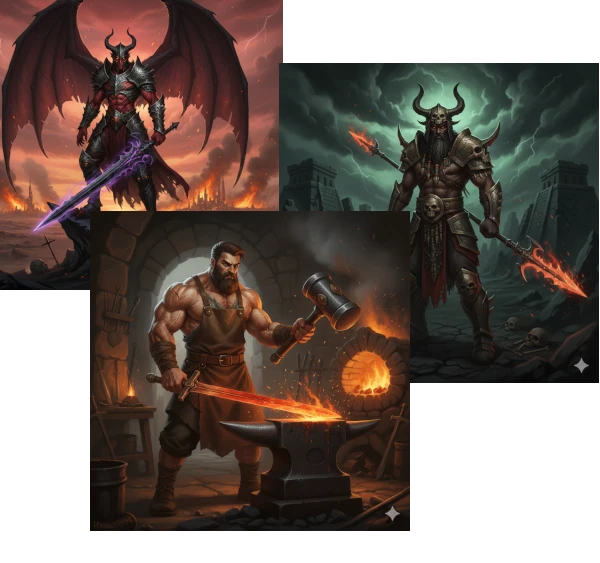
1. Azazel taught men to make swords, daggers, shields, and breastplates. He showed them metals and how to work them: bracelets and ornaments, the art of eye makeup and eyelid decoration, precious and exquisite stones, and all kinds of colored dyes. And the world was changed.
2. Great wickedness and great immorality arose. They went astray, and all their ways became corrupt.
Book of Enoch 9:6
6. Now see what Azazel did, how he taught all wickedness on earth and revealed the eternal secrets kept in heaven.
Book of Enoch 10:4
4. Then the Lord said to Raphael: “Bind Azazel hand and foot and throw him into the darkness. Open the desert that is in Dudael and throw him there.”
From the above verses, it is clear that Azazel, against the will of the Creator, taught mankind how to make weapons. Simply put, he gave them weapons to kill each other. For this act, he was punished.
The second superhuman being, comparable to Azazel, but from Greek mythology, is Hephaestus, who worked in the forge, crafted weapons, and was the protector of craftsmen.
Dipping deeper into the darkness of time, some of the oldest written records come from ancient Sumer, and they provide us with information about the Sumerian god Ninagal, who is described as the “chief smith” (simug gal) of the god An. Ninagal is depicted as a divine smith who can work hard copper, creating tools and weapons from it. According to the list of An’s gods (tablet II, line 348), Ninagal’s wife was the goddess Ninimin, “lady of seven” or “lady of seven.”
Considering that the functions attributed to Ninagal, Hephastos, and Azazel are similar but originate from different eras and peoples, it can be assumed that they probably refer to one and the same person, not God, who taught humans metallurgy and gave them weapons. Weapons that kill and that became the cause for further sins against one’s neighbor.
These are, of course, my speculations, which may not be related, but who has proof that this was not happen?
See also:
https://en.wikipedia.org/wiki/Azazel
https://en.wikipedia.org/wiki/Hephaestus
https://en.wikipedia.org/wiki/Ninagal